Using a study Bible
Before you begin using online tools like Blue Letter Bible, one of the simplest and most helpful resources you can use is a good study Bible. The notes are not inspired in the same way Scripture is inspired. Good notes should send you back into the Bible.
Example 1
Use the study notes beneath the passage
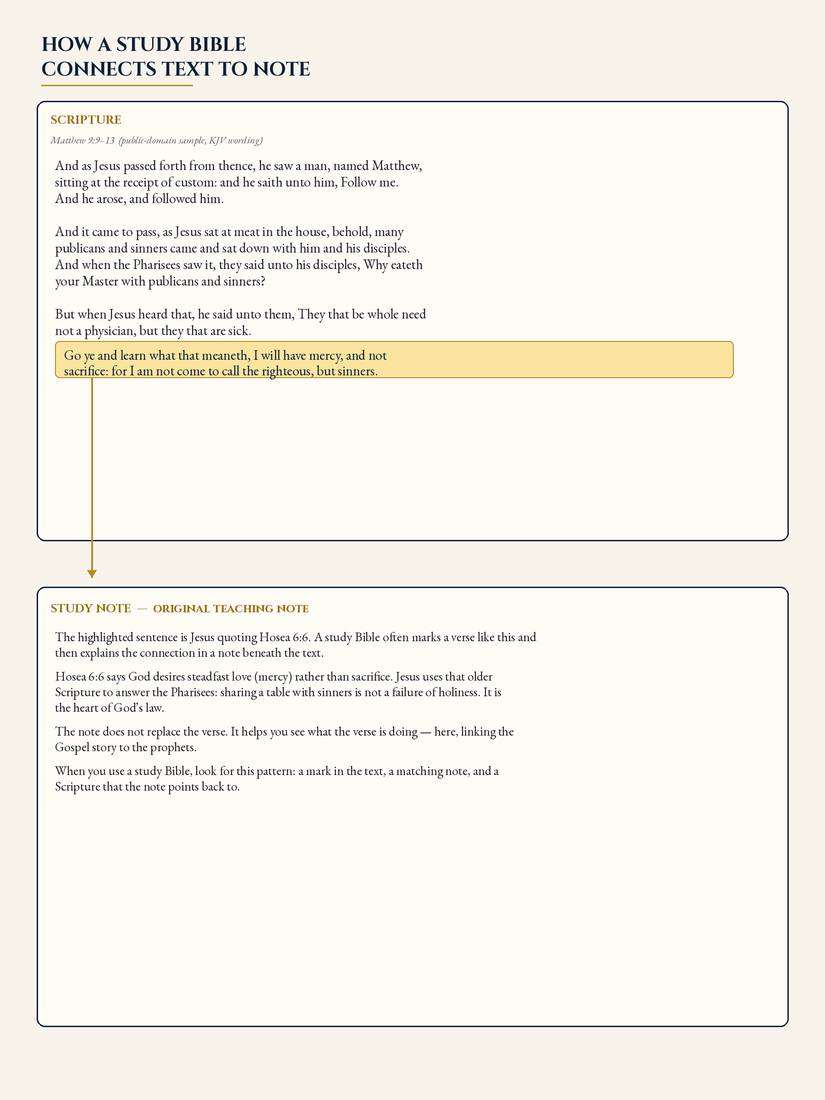
Matthew 9:13
Go and learn what this means: ‘I desire mercy, and not sacrifice.’ For I came not to call the righteous, but sinners.
In a study Bible the passage usually sits at the top of the page, with notes below connected to specific verses. That is one of the easiest ways to slow down.
At first we may understand the general idea of Matthew 9:13. Jesus is showing mercy to sinners, and the Pharisees do not like it. The study note helps us see more: Jesus is quoting Hosea 6:6.
Hosea 6:6 says, “For I desire steadfast love and not sacrifice, the knowledge of God rather than burnt offerings.” When Jesus quotes Hosea, He is exposing the same problem in the Pharisees.
This is one of the first ways a study Bible can help you: it can show you when a New Testament passage is quoting or echoing the Old Testament. When that happens, go back and read the original passage.
Example 2
Use notes to understand the ancient world
Matthew 5:13
You are the salt of the earth.
Sometimes a passage uses an image from daily life in the ancient world that modern readers can miss.
The study note helps explain the background. In the ancient world salt was valuable and useful in ways that may not be obvious to us.
Study Bibles remind us that the Bible was written in real places, real cultures, and real moments in history.
Example 3
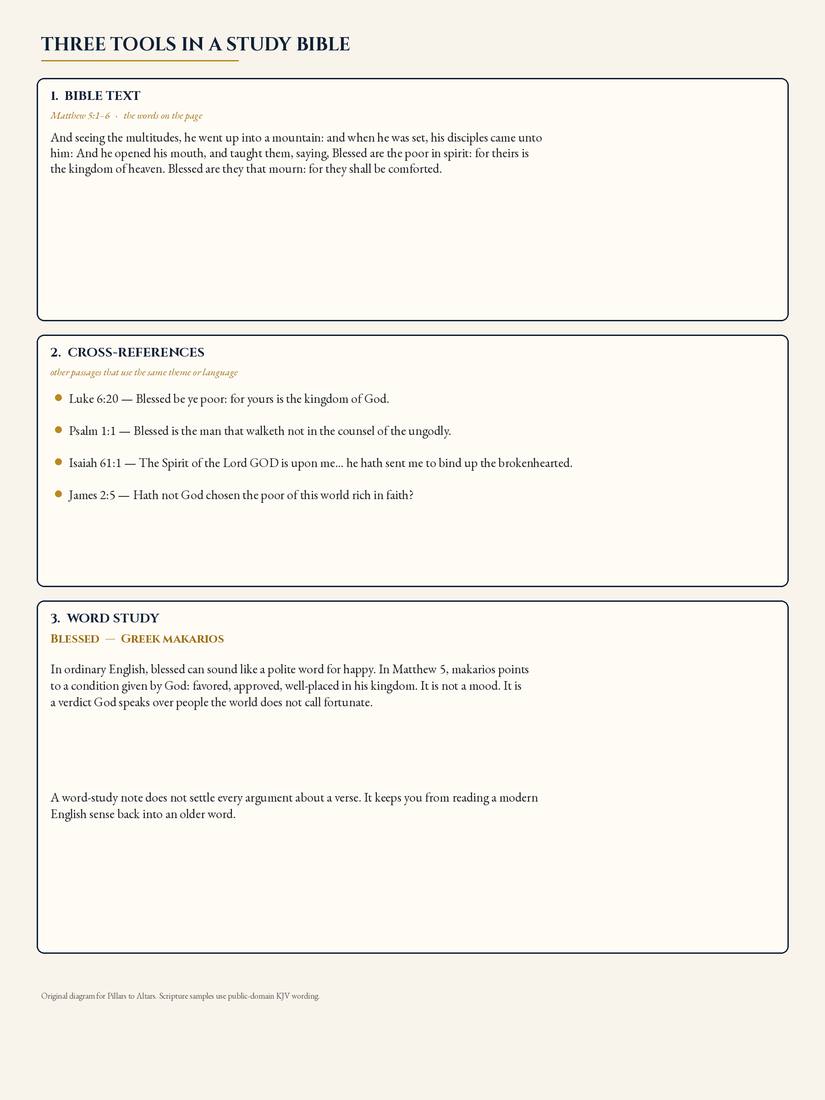
Use cross-references to follow the Bible’s connections
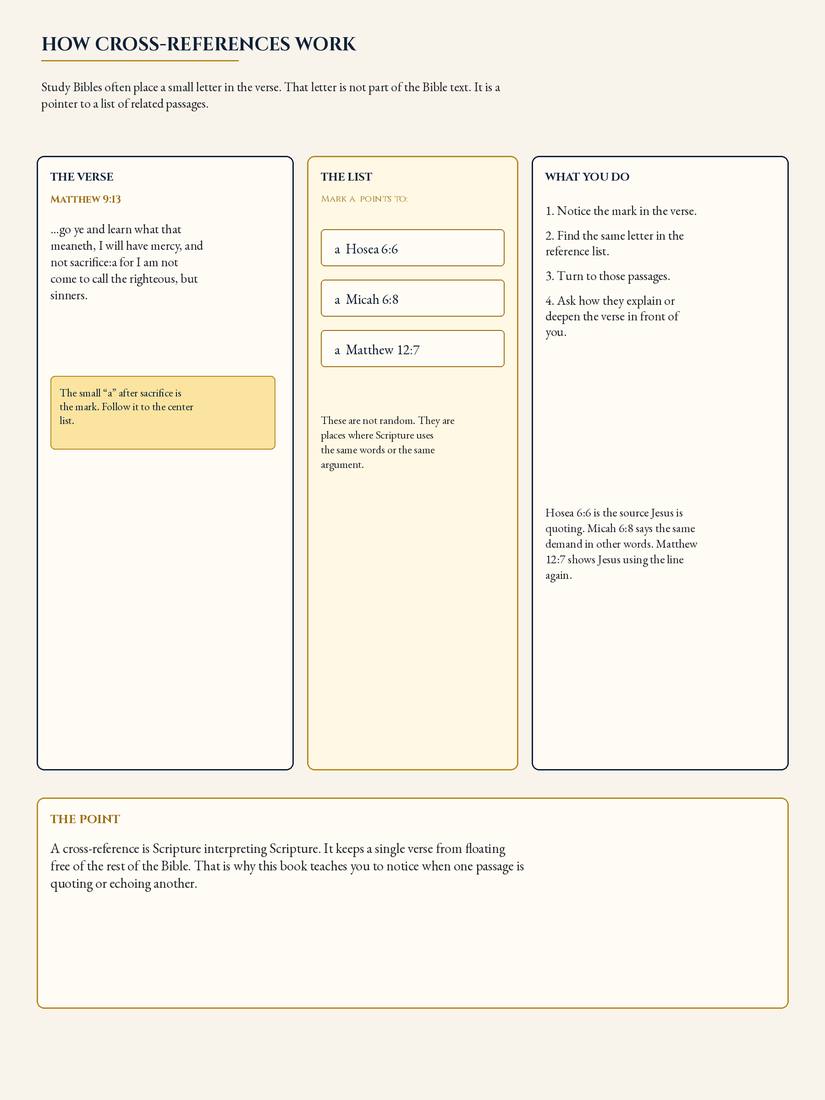
Matthew 9:13 → Hosea 6:6
Cross-references help us let Scripture interpret Scripture.
Many study Bibles include small verse references that point you to other places in the Bible connected to the passage you are reading.
You do not need to chase every cross-reference every time you read. When a verse seems important, look up a few of the references and ask how they help you understand this one.
Example 4
Use book introductions before you start reading
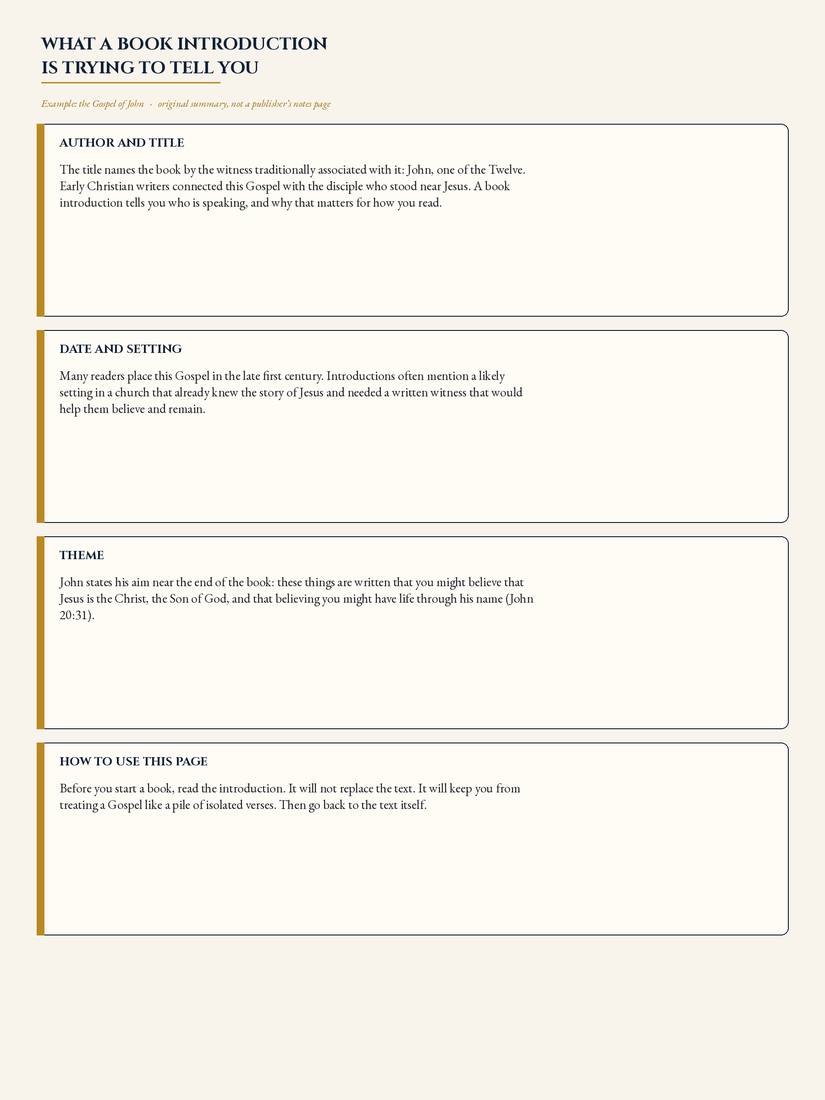
Before you open a book
It is like looking at a map before starting a journey.
Before reading a book of the Bible, take a few minutes to read the introduction. Most will give author, audience, date, setting, major themes, and purpose.
Romans is not the same kind of writing as Psalms. Genesis is not written the same way as Revelation. Let the introduction orient you.
Example 5
Use maps, charts, and timelines to see what is happening
Geography and history
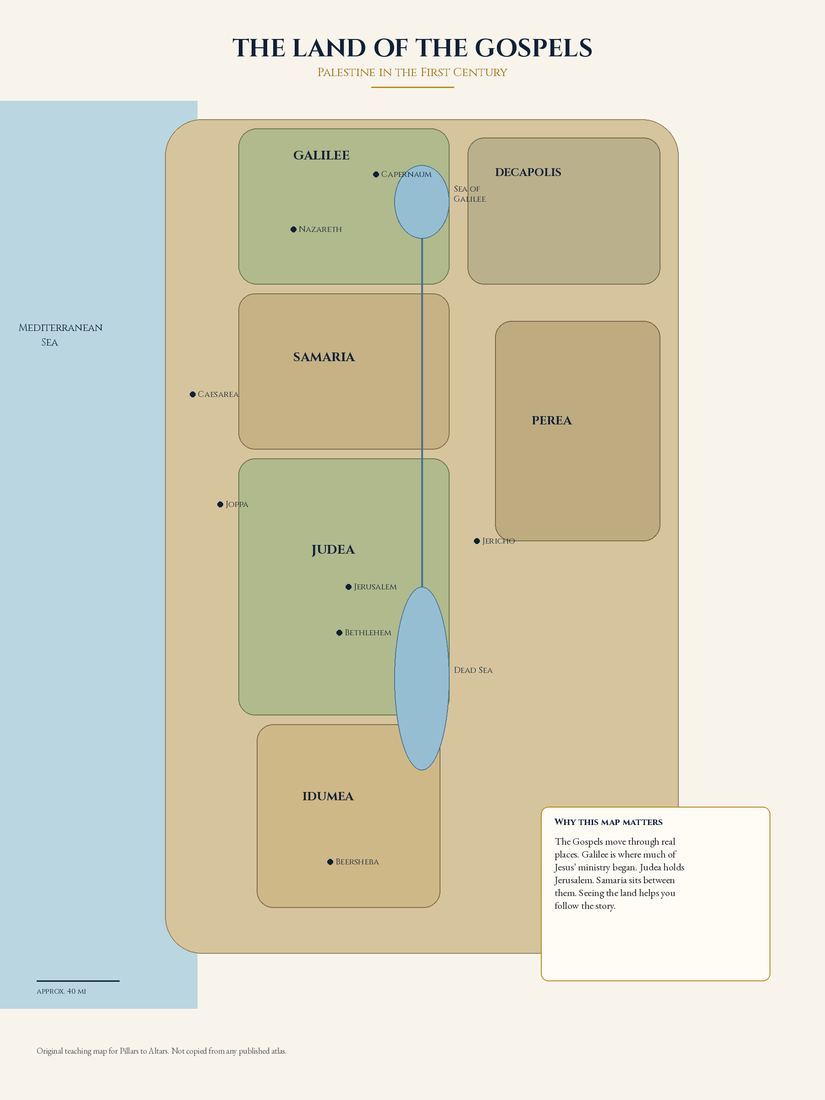
The Bible is not abstract. It happened in real geography and real history.
A map can show you where Abraham traveled, where Jesus ministered, or where Paul went. A timeline can help you understand whether two prophets lived during the same events.
Using Blue Letter Bible
You do not have to be a Hebrew or Greek scholar. Blue Letter Bible is free. It lets you read Scripture, compare translations, view cross-references, and study original words through its interlinear and concordance tools.
- 01 Download the free app and choose your translations (ESV plus one or two others).
- 02 Compare a verse in two or three versions and notice which words change.
- 03 Tap the verse, open Interlinear/Concordance, and follow the Strong’s number.
- 04 Return to the passage. Original-language study should lead you back to the altar, not to pride.