Have you ever had a real breakthrough with God, only to find the old thoughts creeping back a few weeks later?
Maybe you renounced shame, but you still don’t know how to think like a beloved son or daughter. Maybe you forgave someone, but bitterness had already trained your instincts. Maybe you confessed fear, and now you have to learn what trust looks like on an ordinary Tuesday.
If that’s you, it doesn’t mean the encounter was false. It may mean the Lord has begun a work that now needs to be tended. Freedom doesn’t end when a lie is exposed. In many ways, that’s where formation begins.
Egypt had to come out of Israel
Sometimes God changes things all at once. A desire breaks, fear lifts, a wound begins to heal, and we couldn’t have produced it ourselves. We should make room for that kind of grace.
But much of transformation unfolds over time. Israel came out of Egypt in a night, but Egypt had to come out of Israel over years. The disciples left their nets quickly, but they learned the ways of Jesus slowly. Peter truly loved the Lord and still needed to be corrected, restored, and formed.
A pillar moment can mark the beginning of freedom. The altar life is where that freedom becomes character.
“Be transformed”
Paul writes:
“Do not be conformed to this world, but be transformed by the renewal of your mind.”
Romans 12:2
To be conformed is to be pressed into a pattern. Patterns can come from the world, our families, our cultures, our wounds, and our sin. Even religious environments can create them. Paul doesn’t say we can avoid being formed. We’re always being shaped by something. The question is what will shape us.
The word translated “transformed” is connected to the Greek word metamorphoō. It’s the same word used when Jesus was transfigured and His face shone like the sun (Matthew 17:2). This isn’t surface adjustment or behavior management. It’s deep change from the inside out.
And notice how Paul says it. He doesn’t say, “Transform yourselves.” He says, “Be transformed.” For a long time, many of us read that verse as if our job was to study hard enough and try hard enough to become who God wants. We do participate. We renew our minds with truth and obey what He shows us. But we aren’t the source of transformation. God is.
Not every thought deserves your agreement
“We destroy arguments and every lofty opinion raised against the knowledge of God, and take every thought captive to obey Christ.”
2 Corinthians 10:5
This doesn’t mean we should be afraid of every thought that passes through our minds. Many thoughts are just thoughts: memories, worries, reactions, mental noise. But thoughts become powerful when we agree with them, rehearse them, and build our lives around them.
A thought may come as accusation: “You always fail.” It may come as fear: “God won’t take care of you.” It may come as shame: “You’re too broken to be loved.” Or despair: “Nothing will ever change.”
A renewed mind learns to pause and ask: Is this true? Does it agree with God? Does it lead me toward Christ or away from Him?
That isn’t denial. It’s discernment. We aren’t pretending the pain or fear isn’t real. We’re learning that not every thought gets a vote.
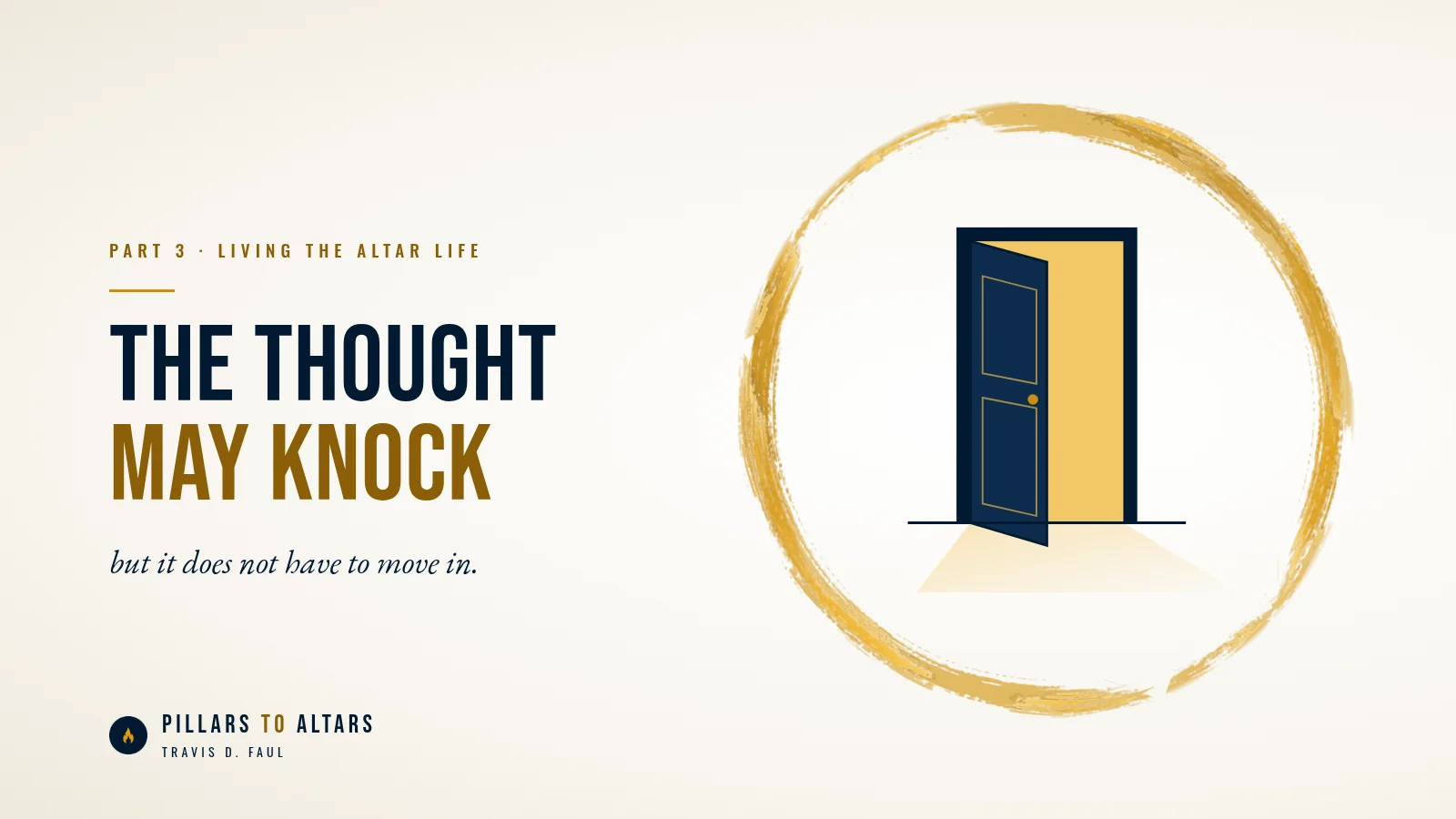
The thought may knock, but it does not have to move in.
Be gentle with the wounded places
Some thought patterns aren’t just bad habits. They’re connected to wounds. Rejection can train the heart to expect abandonment. Repeated criticism can make correction feel like condemnation.
That’s why renewal has to be compassionate. Telling a hurting person to “just think differently” usually isn’t enough. Jesus is gentle with bruised reeds. He doesn’t command our minds from a distance. He comes near to heal the places where lies got attached to pain. That healing can come through prayer, Scripture becoming personal, wise counsel, pastoral care, therapy, safe relationships, and time.
At the altar we can bring a memory or a reaction to Him and say, “Jesus, teach this place the truth of Your love.”
Practices that retrain the mind
Gratitude. Thanksgiving doesn’t deny pain. It refuses to let pain be the only story we tell. It’s spiritual warfare against forgetfulness, and it says, “The Lord is still good.”
Worship. The renewed mind isn’t only about thinking different thoughts. It’s about desire being reordered. As we behold God, lesser loves lose their place at the center.
Community. Lies sound louder in isolation. Sometimes fear gets so loud that we need another believer to remind us what God has said.
Practice. God often forms us in the very places the old patterns used to rule. If fear has been your first response, He may teach you to pause and pray. If hiding is familiar, He may invite you into the light. At first the new pattern may feel unnatural. That doesn’t mean it’s fake. It just means it’s new.
You might say, “I am loved by God,” while your emotions still resist. That’s okay. Obedience often starts before feelings catch up. Over time, what felt foreign starts to feel like home.
The renewed mind usually isn’t formed in one emotional moment. It’s formed through repeated surrender to the God who makes all things new.
A pillar remembers the moment truth broke through. An altar becomes the place where truth keeps forming us.
Go deeper in Pillars to Altars, Chapter 11: The Renewed Mind.